
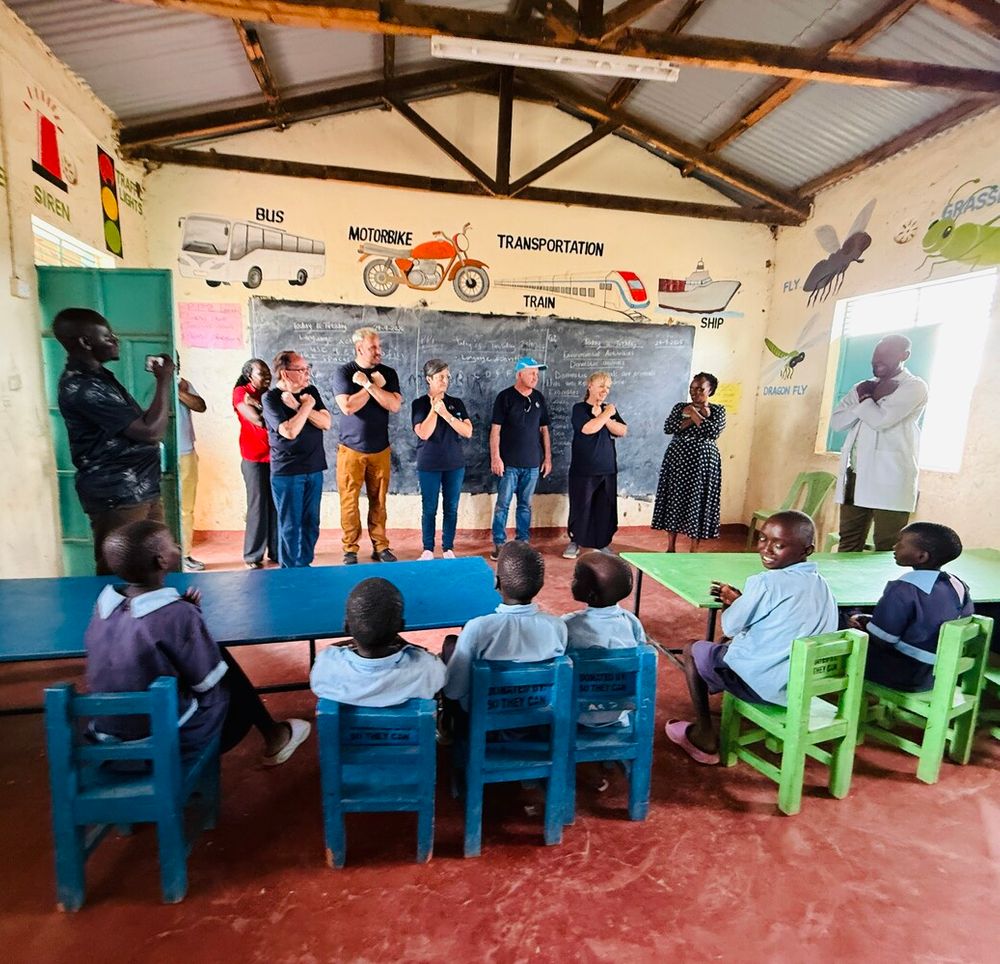
I’ve never stood in front of a school class of deaf children.
At a school in Baringo, the children sitting in the class taught us the signs for love, friendship, happiness and gratitude.
We smiled at our attempts to communicate. They smiled back. And in those moments, we felt a connection that needed very few words.
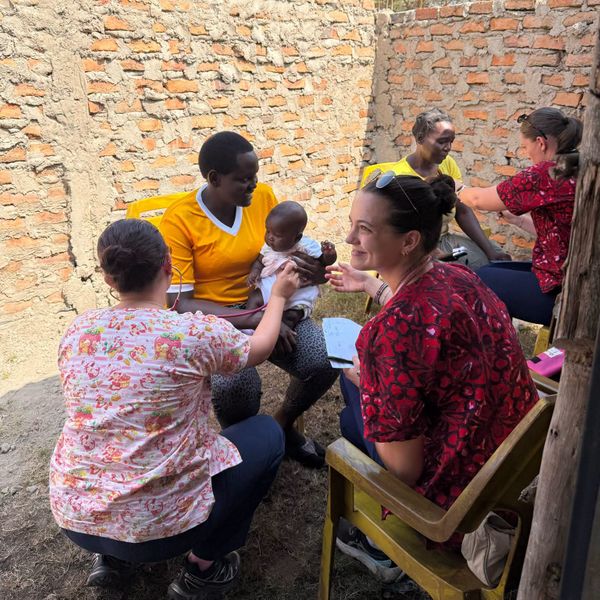
This (and many other things) happened on the B1G1 Study Tour in Kenya, where we visited projects with So They Can, The Mango Tree and Kilimanjaro Blind Trust Africa. We went to understand the work more deeply and meet the people behind the giving that our B1G1 community supports.
We came home carrying stories that continue to unfold in our minds.
Education grows through many kinds of support
At the school for children who are deaf or hard of hearing, we learned how So They Can had helped raise awareness among families and expand the school’s capacity.
For children who live far away, boarding makes attending school possible. Teachers who understand their needs help them learn, communicate and imagine their futures.
One of those teachers is Harrison. Growing up deaf himself, he understood the challenges his pupils faced. Now, he was helping another generation learn.
Meeting him helped us see how education can continue to create change through one person’s life.
We saw how closely education connects with food, water, menstrual health and family income. Each helps create the conditions for a child to attend school and keep learning.
Caring for the land can strengthen a family’s future
With The Mango Tree, we walked through Wire Forest and heard about the work local organisations and communities were doing to restore it.
We also joined a farming family installing beehive boxes. Later, we sat beneath a tree with Jacob and his family, listening to how he had not only become a bee farmer, he had gradually brought previously abandoned land back into productive use.
Fruit trees, vegetables, goats, hens and beehives had become part of the life he was building. His children’s education was part of that story too.
What stayed with me was the patience involved: learning about the soil, learning things, trying things, managing water-usage and continuing through setbacks.
A contribution towards a tree or beekeeping support makes that work. Its meaning grows through the knowledge and work of the people who use it.
Access to learning includes the tools and the people who keep them working
Kilimanjaro Blind Trust Africa’s work brings another dimension to educational opportunity.
Digital Braille devices give learners who are blind or have visual impairments access to reading materials, assignments and exams. Accessible learning tools can also expand opportunities to study mathematics and science.
That support includes training teachers and technicians, maintaining equipment and making learning materials accessible.
It reminded me to look beyond the initial gift. A device needs to remain useful. A learner needs support as their education progresses. The people who sustain that access are an essential part of its impact.
Your giving becomes part of a living community
We often choose a project and contribute in a few moments.
Our partners, teachers, farmers, technicians and volunteers continue the work long afterwards. They build relationships, share knowledge, solve problems and they keep showing up.
Being in Kenya helped us appreciate those connections more deeply. Giving can support a child’s learning, strengthen a family’s livelihood and help restore the land they depend on. Those changes help them support one another over time.
To you and every B1G1 Member who has contributed to these projects, thank you.
I hope this video brings you closer to the people and the places your giving reaches and helps you feel the significance of the part you play.
With much gratitude,
Masami and Paul